
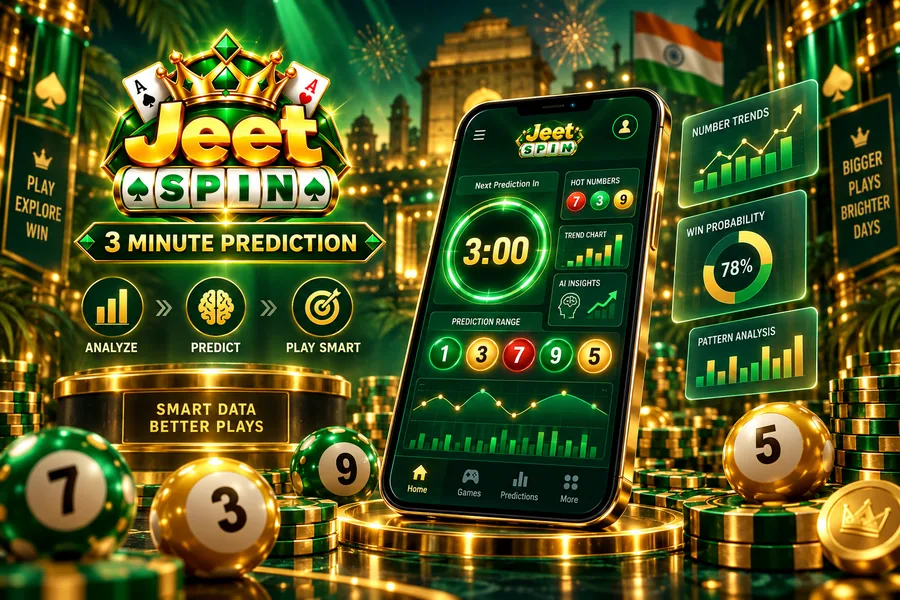
Three-minute intervals provide a useful example of how changing the length of a timer affects a dashboard. There are fewer display updates than in a one-minute view, but the underlying questions about source quality and reliability remain the same. This page describes what its IST interval means, why the example values are deterministic, how to interpret a short list of previous examples, and why none of those features validates real-world gaming predictions.
Illustrative period reference
This local demonstration is not connected to an operator, official draw or outcome feed. Its displayed number, colour and category are algorithmic examples, NOT forecasts, win chances or betting recommendations.
Generated from a stable website-specific example key and IST time bucket. The same example interval displays the same illustrative values across refreshes, but that consistency does not mean accuracy or predictive power.
Recent illustrative reference periods
| Demo period | Digit | Colour | Group |
|---|---|---|---|
| Enable JavaScript to show locally calculated example periods. | |||
Demo only. No official result data is loaded.
Three minutes is a display choice, not a game rule
This screen divides a day into consecutive three-minute blocks measured against India Standard Time. There are 480 such example blocks in a complete day. The counter advances according to a fixed clock boundary, so any two users observing the same moment can identify the same demonstration period. A game operator could define a different beginning, break or calendar convention; without independently verified provider specifications it is impossible to infer that these example periods match any live game.
The precise interval can be helpful when learning to read timestamps, identify state transitions or test how a mobile dashboard behaves after the screen has been locked. Those are software-interface questions rather than gambling predictions. The page deliberately avoids language suggesting that observing a few intervals provides a method of financial gain.
What the interval ID contains
A demonstration label combines an IST date, an interval size and an ordinal number within that date. This design makes the label stable and easy to compare. If you refresh the page during one three-minute block, the ID remains unchanged. As the boundary passes, the next identifier appears. At midnight in India, the date portion changes and the count starts again for the next day. This is an internal website naming convention, not an official numbering system.
A label can appear complicated and still convey only simple information. The presence of a long number does not establish an encrypted connection to a provider, the existence of a database or a certified data feed. To verify any genuine claim of a live result, the publisher should disclose where results come from and what independent evidence supports them.
A slower cycle does not improve prediction quality
Compared with the one-minute screen, a three-minute dashboard gives a longer opportunity to read the current example before it changes. Slower updates can reduce visual pressure, but no mathematical relationship follows between display duration and the accuracy of an unrelated number. A software function can produce equally arbitrary example numbers every sixty seconds or every three minutes. Neither schedule converts those values into a measured probability of success.
It is also possible to see several matching colours within an illustrative sequence. A streak may be interesting to view, but the dashboard is not monitoring a real process. It is displaying deterministic demo output. Do not treat a repeated value as a market trend, an operator signal or a reason to participate in a financial activity.
Use the reference history correctly
The history table is calculated from previous locally defined three-minute periods. Its entries are not drawn from a server and are not backed by official records. Every row is a sample produced by the same algorithm, so it exists to demonstrate how a history component can render several labelled intervals consistently. It cannot be compared meaningfully with real draw statistics when no actual result dataset is connected.
A genuine performance evaluation would require properly timestamped predictions established before outcomes were known, a sufficiently large and complete sample, and verification against authoritative results. It would also require a clear discussion of selection bias and how chance creates apparently meaningful patterns. No such claim is being made here.
Understanding a three-minute reference category
The demo colour, digit and Big or Small labels are internal presentation categories. The label names are chosen to make the interface legible rather than to reproduce rules from a particular game. A different service might assign colours or groups differently, use more than one digit, or not display such fields at all. It would be incorrect to assume that the labels on this page specify the outcome mechanics of a brand-name game.
Because the values derive from a stable website key and a period label, two different visitors viewing the same period will receive the same illustrative values. That makes the demonstration repeatable, a useful property for testing. Repeatability is not independent validation, and it does not supply a reliable method for determining future external outcomes.
Pause between updates instead of chasing a signal
Three minutes can be enough time for someone to repeatedly check a screen, refresh a browser and become invested in a supposed pattern. Such repeated monitoring can make an ordinary clock feel urgent. The next period is not a deadline imposed by this website. Visitors can pause, switch to another informational page or stop altogether. No registration is necessary to examine the period demonstration.
Financial decisions should never rest on unverified graphics. Do not borrow money to participate in online games, attempt to regain past losses or overlook current legal restrictions. If you feel compelled to act after every interval, consider whether stepping away from the activity is a better use of your time and attention.
What to verify about external information
If a platform advertises live three-minute predictions, ask for the legal identity of the entity making the claim, a description of the underlying data and a transparent method of independent validation. Screenshots showing only successful examples cannot establish consistent performance. Look for documentation about missing intervals, failed forecasts, excluded records and changes in methodology. A claim made after an outcome is known is not a verifiable advance prediction.
This site cannot certify any other website, account system or application. It does not accept passwords, OTPs or other gaming credentials. Readers should verify security and current local eligibility independently, especially where an online service involves money or data collection.
Making the mobile experience readable
On a phone, the period dashboard stacks values so that every label has enough room. Text accompanies each colour example, and the page retains a visible explanation of the difference between demo values and real outcomes. The table itself can scroll sideways inside its own container without making the whole page wider than the viewport. That makes a long ID readable on narrow devices.
The same accessible Predictions menu groups the four periods together in desktop and mobile navigation. The three-minute page is a separate WordPress page with a distinct heading, description and subject matter, not merely the one-minute page with a different number substituted into the title.
Independent and responsible use notice
These pages describe an educational clock-based reference, not an official prediction service. The sample values are computed without results data, have no established forecasting accuracy and should not be used for gambling or financial decisions. The site does not receive bets or verify accounts. Readers in India should check eligibility, applicable law and the identity of any external service using independent official sources. Set clear limits for time and spending, never borrow funds to play, and do not chase losses.
Questions about this 3 minute demonstration
Is the three-minute period synchronized to any official game?
No. It is a site-defined three-minute interval on the IST clock; no provider schedule has been verified.
What does the reference history record?
Only previously calculated demonstration values; it is not a history of winning or actual game results.
Can identical values across periods imply a trend?
No. Repetition in a short deterministic example is not a validated forecast of a separate process.
Where can I read about safer mobile access?
Use the App, Security and Responsible Gaming pages for device, privacy and time-limit information.